Our Fractional E-commerce Manager Didn’t Get Replaced by Claude. He Made it the Second Member of a Two-Man Team.
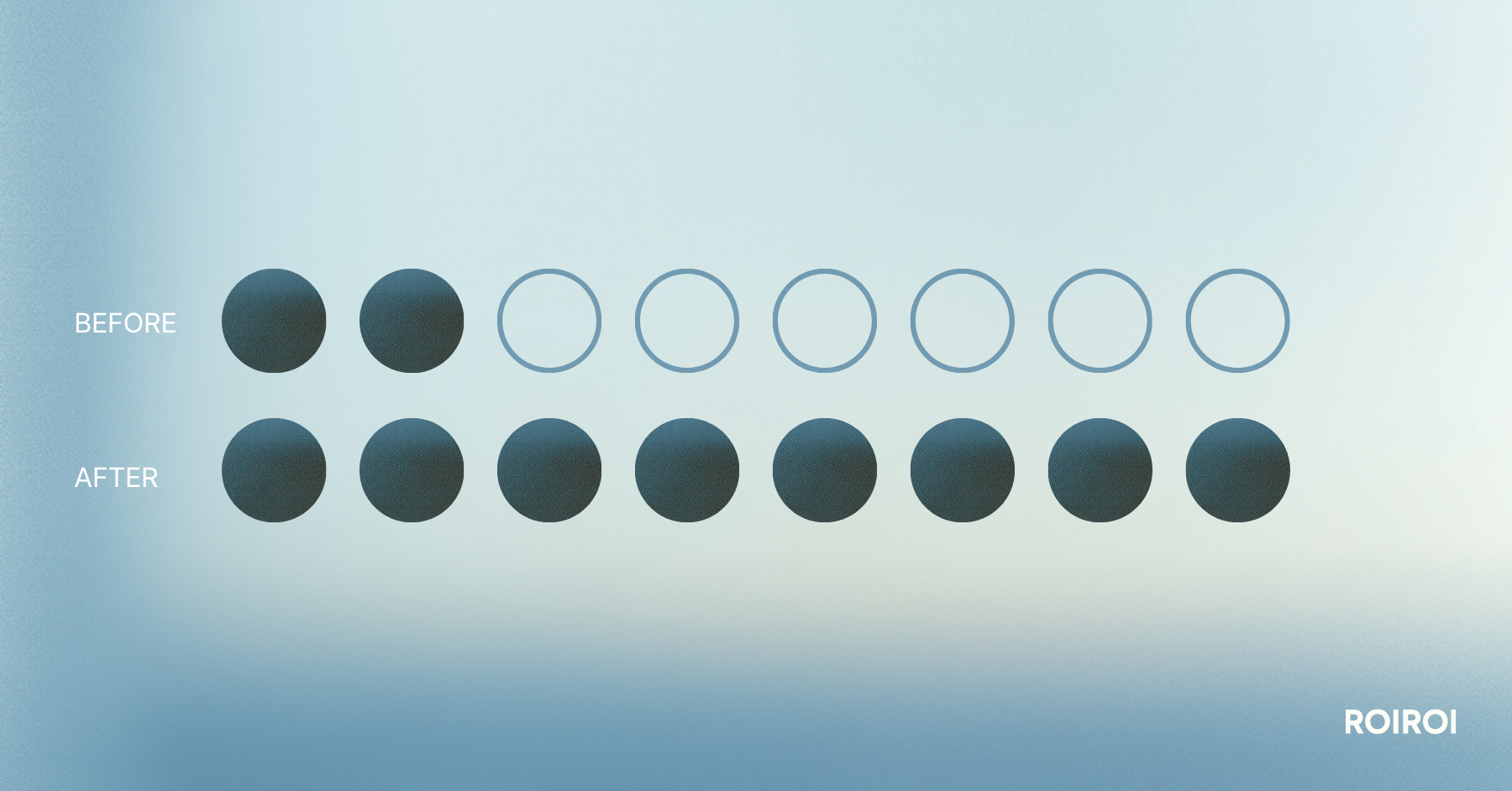
Eight customer journey moments should have triggered an automated email. Only two actually did.
We don't talk about it as much as we probably should, but ROIROI's team is packed with expert practitioners whose careers originated brand-side. It gives us a unique advantage and perspective when it comes to helping our clients actually get things done. How? By offering fractional resources across our three service lines: design & engineering, performance marketing and AI & automation.
This simple but effective way of working allows our customers to focus on what they do best whilst outsourcing the important but time-consuming duties of an e-commerce manager, CRM executive, designer or developer to a dedicated ROIROI employee. Our resources can be scaled up and down as needed so that our clients get all the benefits and industry knowledge of an experienced FTE without any of the hiring headaches, long-term commitment or costly overhead.
We're no strangers to the fact that AI is changing the way brands need or want to work with agencies, but instead of fearing this change, we're leaning into it. Here's how.
The problem: a customer journey that was almost entirely silent
When our Head of Client Strategy and fractional e-commerce manager first got his hands on our client’s store, he found reams of potential and not much else. The brand in question has an enviably large customer base and a best-in-class email platform that can do everything a modern retention program needs. They simply hadn’t had the time to set it up effectively. New subscribers got one welcome email, then silence. Someone would browse a product for ten minutes, leave, and receive no follow-up. Customers received no thank you and no care instructions after making a purchase. When their product was due to run out, nothing sent them a helpful reminder to reorder. Unsurprisingly, therefore, when they stopped engaging with the brand altogether, no one noticed. Eight customer-journey moments should have triggered an email and only two actually did.
On top of that, there was no audience targeting going on at all. Every email sent was set up to go to old, imported lists instead of the people who actually opened and clicked. Those bulk sends were in turn doing real damage by triggering unsubscribe spikes in the hundreds each time they went out. A newsletter that should have been drawing on a steady stream of glossy new editorial content was going out roughly twice a month, irregularly, despite new material being ready every week. Two working flows were carrying the entire retention program.
Not a strategic mystery, a scoping and speed problem
This is exactly the kind of gap our fractional ecommerce managers know how to spot - and fix - immediately. There was no lengthy research or discovery phase needed because our teams have implemented these fixes in real brands dozens of times before. Our Head of Client Strategy mapped the entire customer journey end to end, decided what should happen at each stage, and then built eight flows, a working segmentation model, and a repeatable newsletter format, correctly, in the brand's own tone and design. His experience made it all possible, but even the Head of Client Strategy has his limits. Enter Claude.
Working inside the brand's own email platform, the build covered a longer welcome series for new subscribers, a separate welcome series for a second customer type entering through a different channel, browse and cart-abandonment reminders, a full post-purchase series covering thanks, care guidance and feedback, a replenishment reminder timed to when the product actually runs out, a win-back sequence for lapsed customers, and a sunset flow to stop emailing people who never open, protecting deliverability for everyone else. Alongside that, Claude built - according to our Head of Client Strategy's instruction & pre-defined strategy - four self-updating segments that now route every campaign to the right audience automatically, rather than to whichever list happens to exist.
The flows, the copy, the timing logic and the segment definitions were built automatically inside the platform, in the brand's own visual identity, in both languages the brand operates in, ready to review rather than ready to be scoped as a future project. A newsletter format was also built that turns an existing piece of editorial content into a finished, product-linked send in minutes rather than hours, which has made a weekly newsletter cadence realistic instead of aspirational.
Where judgment still had to sit with a person
None of this replaces the fractional manager's actual job. Our Head of Client Strategy still had to look at the customer journey and decide which of the silent moments mattered most, in what order, and why. He still had to decide how aggressively to target a replenishment reminder versus a win-back message, and where the line sits on using a customer's purchase history for marketing versus strictly transactional contact, which is a real legal and brand-trust question, not just a technical one. A human still has to review any new flow before it goes live, and someone on the client side still needs to sign off on cadence, targeting rules, and tone before any of it reaches a real inbox.
That’s why we’re treating AI like an employee or a collaborator, not the boss. Claude did not decide that a silent customer journey was the priority. It didn't decide that engaged, active openers should become the default audience instead of an entire historical list, even though that means fewer emails sent and, on paper, a smaller number to report. Our Head of Client Strategy made both calls, because both require actually knowing the brand, not just knowing what a "good CRM setup" generically looks like. Claude’s power is that the distance between making that call and having eight fully-built flows sitting ready for review dropped from a multi-month project to days.
That’s why we’re so excited about this service and the success it has already proven for our clients. Compressing this type of rollout to days rather than months means we’re already talking to our client about what’s next on their roadmap - and a job that would have been insurmountable for a brand in terms of time and cost before Claude has already been shipped.
What this means for a fractional model
Our fractional ecommerce manager's value is that they know exactly where the money and the risk sit inside a customer journey, and they can advise on the right thing to build before it costs our clients another quarter of lost repeat purchases and unnecessary unsubscribes. Claude simply closes the execution gap. It doesn't replace the judgment about where to point it.
This same approach - mapping a journey then building directly inside the client's own platform - is repeatable anywhere a fractional manager has the access and the platform allows it. It isn't specific to email, and it isn't specific to one industry. It's a pattern for how fractional support can now operate: judgment at the front deciding what's worth fixing, AI closing the distance between that decision and a working build, and a human review at the end before anything reaches production. Skip the judgment and you get a generic work that could belong to any brand. Skip the review and you get experiences nobody actually checked before they became customer-facing. Keep both, and a fractional manager can now cover in days what used to take a standing team a full quarter.
Any growing brand with a poorly-tended roadmap, lofty growth goals and a constrained budget should now be seriously considering whether an AI-augmented fractional e-commerce manager is the right investment for them. Neither agency nor brand needs to be fearful of the implications of AI taking their job away - it’s simply the most efficient team member you’ve ever had.